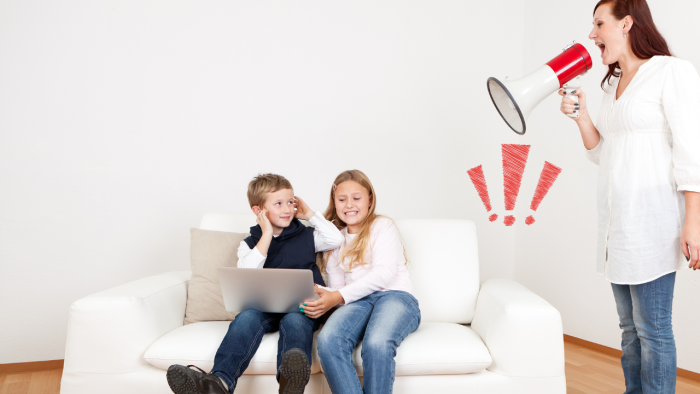
You’ve yelled at your child and you feel terrible. You know there are other strategies to get them to listen or respond, but in the moment, yelling is what comes out.
There is a way out of the reactive cycle of stress, yell, guilt, and try again the next day! Here are 7 simple tricks you can use to stop yelling at your kids.
1. Find Your “Hot Spots” in the Day
There are points in the day when you are more susceptible to getting angry and losing your temper. These are what I call “hot spots.”
Here are the most common ones: the morning rush to get out the door on time, trying to get dinner on the table after a long day, the bedtime routine, leaving playdates or an activity, right before naptime, grocery shopping, running late, and when you’re on the phone and keep getting interrupted. These situations are when you’re the most vulnerable to triggers, and also when misbehavior is likely to increase.
Sometimes the answer is related to our parenting: needing to create a good daily routine, enforce rules before things are out of control, or following through on what we say. Sometimes the answer is to take better care of ourselves.
Once you find the parts of your day when you’re more susceptible to anger, you can build in habits or practices to help you. Think of this as a “strike while the iron’s cold” approach to parenting.
If running late is a trigger for you to get angry, add in 10 extra minutes to help you get the kids out the door on time. If getting out of the house in the morning always escalates into a shouting match, prep the night before. Have your kids wear their socks to bed if that’s what you nag them about putting on in the mornings.
Another way to be proactive might involve always bringing snacks to head off whining in the middle of an activity or packing small toys & sticker or coloring books to keep your kids busy (and less likely to fight with one another) while you’re running errands.
2. Take Care of Yourself
You can’t give to your family and children if your well is dry and you have nothing to give. In other words, if you want to be a positive influence on your family, you need to take care of yourself first. This means you need to not only make sure you’re getting enough sleep and eating food that nourishes your body, but putting yourself on the calendar too.
You need to schedule activities for yourself that make you happy, feed your mind and heart, and also make you feel a sense of accomplishment, so you can go back to your kids and family feeling fulfilled enough to give part of yourself to them.
3. Change Your Voice
One of the easiest and simplest tricks to change the temperature of the situation and get your kid’s attention without yelling, is to whisper. Yelling can be heard above all the noise, but when you whisper, everyone needs to stop what they’re doing and give their full attention to hear you.
I know this sounds crazy, but you’ll be surprised how quickly everything will go quiet in the room so your kids can listen to what you are saying!
4. Get Some Fresh Air
Fresh air has so many benefits, and when you’re in a funk, it can do wonders to your emotional state and even your blood pressure. According to the American Heart Association, spending time in nature can help relieve stress and anxiety, improve your mood, and boost feelings of happiness and wellbeing.
Also when you’re inside, the air becomes polluted which means your body has to work harder to get the oxygen it needs to function. All this extra hard work can raise your heart rate and blood pressure. However, when your brain has access to fresh air, it doesn’t have to work as hard.

Breathing fresh air can also help regulate your levels of serotonin. With too much serotonin, you can become irritable and tense, and with too little, it can make you depressed.
So, open your windows and doors to circulate fresh air in your house, but also, step outside for 15 minutes when you feel your blood pressure begin to rise, for an instant boost of mood and a dose of calm.

5. Get Down on Their Level
This is one of my favorite tools in my parenting box, because it’s so simple, yet it also makes me connect with my child and her with me.
Squatting down at your child’s level so you’re eye to eye takes away the impulse you have to shout. You are less likely to yell at them in this position, being so close to their face, and it makes you stop for a minute so that you can change your body language.
Also, your child can hear you and look you straight in the eye this way. This opens the communication on a gentle level and brings you back to connecting with one another.
6. Tag Out with Your Husband or Friend/Family Member
When things feel intense, before you react to your kid’s needs or misbehavior, ask your husband, neighbor, mom, or friend to take over for 20 minutes while you take a break. 20 minutes can help you step outside for fresh air, gain a new perspective on the situation and calm down.
If you’re solo, set your kids up to play independently for this time and step out of the room, but not out of earshot just in case.
7. Ask for a Hug
Sometimes, all it takes to stop feeling angry at your child is to wrap your arms around him or her. Hugging for at least 20 seconds increases your levels of oxytocin (the love hormone), and reduces blood pressure and cortisol, which is the stress hormone.
When you’re connecting this way, it helps you remember how much you love them, and all you want to do is hold them longer, not raise your voice or say something you’ll eventually regret.
This list of solutions for a yell-free home are fairly simple to start implementing, but do make a world of difference!
Watch the video:
Leave a Reply
You must be logged in to post a comment.